
loyal customers, one campaign at a time


AI is in every marketing pitch right now, texting included. Some of it is genuinely useful. Some of it is a demo that falls apart the moment a real customer replies. This piece sorts the two, so you can use AI for what it is good at and ignore the rest.
Start with why the channel is worth the effort at all. Texts get opened at about a 98% rate, most within a few minutes. Email sits around 20%, and social posts reach whoever the algorithm feels like showing. AI does not change those numbers. It changes how fast you can produce good messages for a channel that already works.
The theme is speed. AI removes the friction between an idea and a draft, which for a busy owner is the difference between sending a campaign and never getting to it.
Be skeptical of any tool that promises to run your texting on autopilot with no human in the loop. Here is the honest limit: a human should approve what goes out. AI does not know that you are closed for a private event on Friday, that a regular just had a bad visit, or that the phrase it picked sounds nothing like you. It writes plausible text, not correct text. Plausible is fine for a first draft. It is not fine for a message that lands on 400 phones under your name.
Also be wary of claims that AI can guarantee results. It cannot. It can help you write and time messages. Whether those messages work still depends on the offer, the list, and the relationship, none of which a model can manufacture.
The workflow that holds up is simple. Let AI draft. You edit for voice and truth. You approve. The platform sends. That order matters. It keeps the speed of AI and the judgment of a person who actually knows the business. Skip the approval step and you trade a few saved minutes for the risk of a message that embarrasses you in front of your best customers.
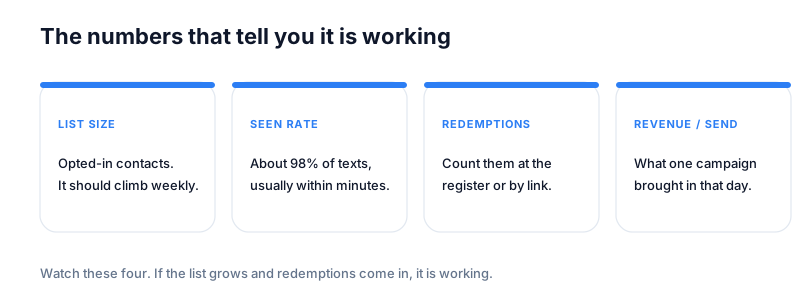
AI is easy to get excited about and hard to judge without numbers. So watch the metrics that tell you whether your texting is working: how your list is growing, how many people reply, how many redeem an offer, how many opt out, and what each campaign costs in credits, since one credit sends one SMS segment. If AI helps you send better messages faster, those numbers move. If they do not, the tool was a demo, not a help.
AI is a strong assistant and a poor autopilot. Use it to beat the blank page and to sharpen your timing. Do not use it to replace the judgment that makes a local business feel local. The rules still stand no matter who or what drafts the message: written consent, Reply STOP, identify yourself, respect quiet hours of roughly 9 AM to 8 PM local, and never buy a list. Point AI at the busywork, keep a person on the voice, and text marketing gets faster without getting worse.
Want to measure what works? Get Measuring Text Marketing ROI, free. Or start texting free →